Duda Website Builder vs. Custom Development: A Strategic Guide for Agencies and Mid-Sized Brands

October 8, 2026

Introduction


As businesses demand more from their web presence, selecting the right foundational platform has become a strategic decision. Recently, the Duda Website Builder has gained significant traction as a closed-source SaaS platform optimized for fast web deployment. This has created a new choice for mid-sized brands and growing agencies: Should you build your digital presence on an all-in-one platform like Duda, or stick with Custom Software Development?


Both approaches have distinct merits, but they serve completely different business strategies. This deep-dive breakdown evaluates both models across performance, long-term costs, scalability, and code ownership to help you make an informed decision for your company.


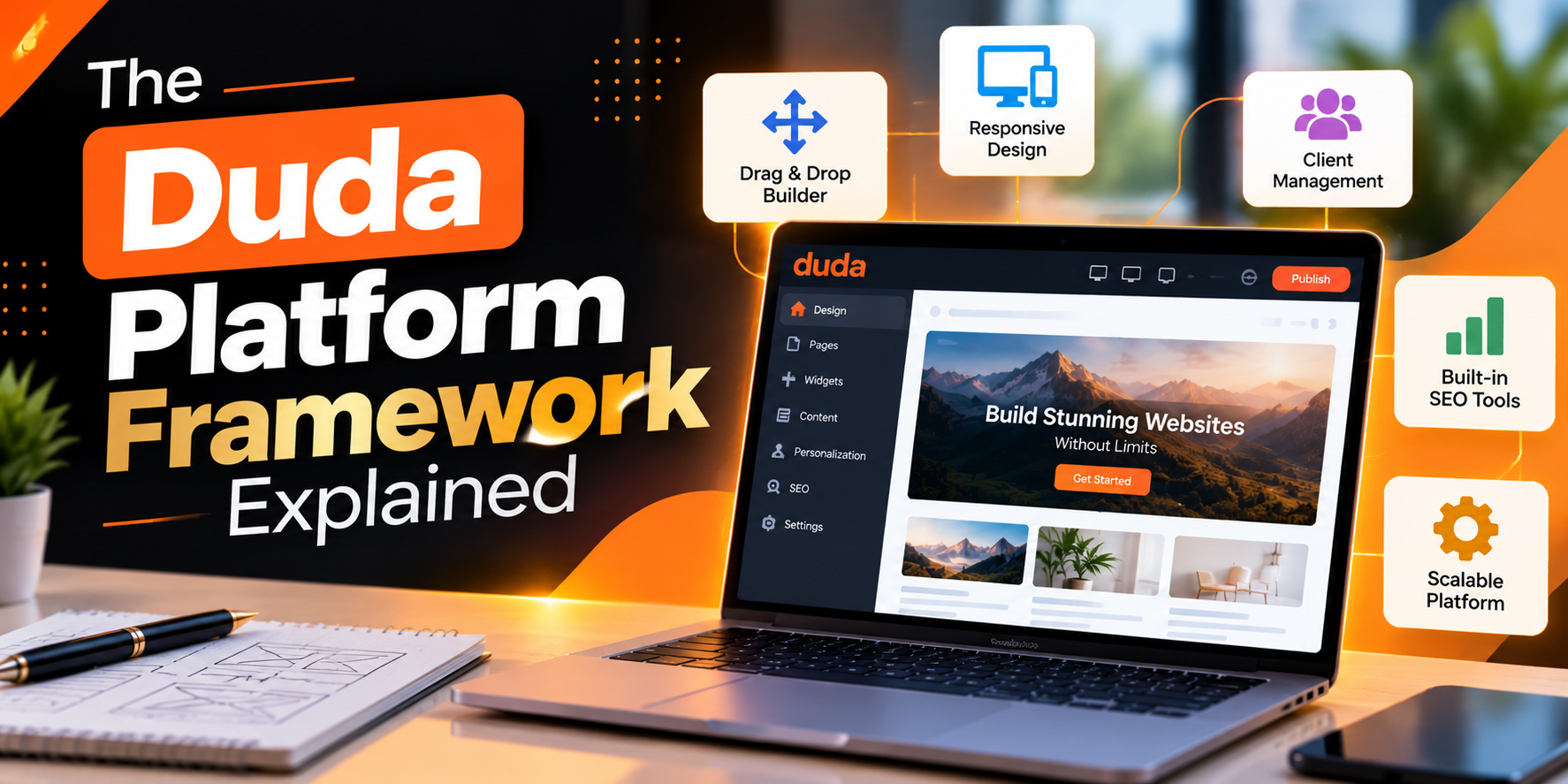
The Duda Platform Framework Explained


Duda positions itself as a robust visual editor tailored for rapid deployment, client management, and built-in widget integration.


The Strengths:


The Limitations:


  • SaaS Subscription Overhead: You pay recurring monthly fees per website. As your site scale grows, these platform costs scale with you.
  • Restricted Code Access: You do not own the core infrastructure code. If you ever decide to migrate to your own cloud infrastructure, you have to rebuild the website from scratch.


The Custom Development Framework Explained


Custom development involves engineering your digital platform from scratch using modern tech stacks (such as Next.js, React, Node.js, or custom CMS frameworks).


The Strengths:


  • Total Intellectual Property Ownership: You own every single line of code. Your website is a proprietary digital asset that adds directly to your company's valuation.
  • Infinite Functional Freedom: There are zero platform restrictions. You can build advanced web apps, connect unique API integrations, and create proprietary customer dashboards without system boundaries.
  • Highly Optimized Cloud Scaling: Custom architectures can be hosted on highly efficient cloud environments (like AWS or Google Cloud), keeping your infrastructure costs predictable even at scale.


The Limitations:


  • Technical Management: Your business must partner with an agency or maintain internal developers to monitor updates, security patches, and server setups.


Feature Matrix Comparison

Capability Metric Duda Website Platform Custom Software Development
Code Ownership Proprietary SaaS Lock-in 100% Full IP Asset Ownership
API Customization Restricted to Duda API Widgets Infinite Open-Ended API Integrations
Hosting Autonomy Managed Duda Cloud Servers only AWS, Google Cloud, Private Servers
Functional Limits Fixed platform boundaries Custom app features built to order

Conclusion & Call to Action (CTA)


The choice comes down to your long-term business goals. If you need a fast, reliable, and straightforward informational website with minimal maintenance, Duda is an excellent option. However, if your website is a core product that requires custom software integrations, data privacy controls, and total code ownership, Custom Development is the only way to scale without limitations.


At Weeb Innovation, we don’t believe in one-size-fits-all solutions. Our team analyzes your business needs to build the exact technical infrastructure that will drive your long-term success. Contact our technical consulting team today to map out your next digital asset!

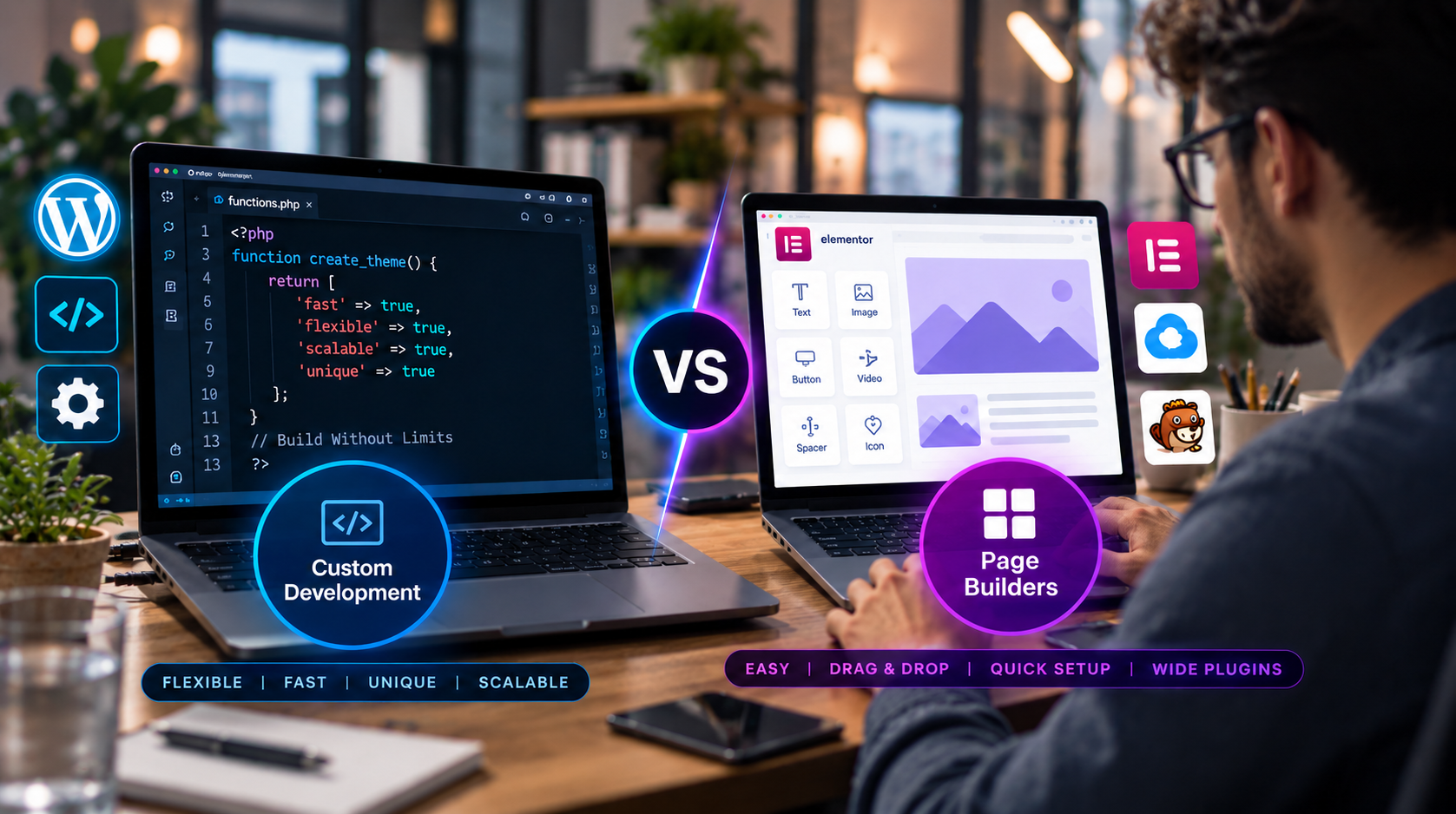
Two laptop screens comparing WordPress code and a visual website builder in a modern office
October 6, 2026
Compare WordPress page builders like Elementor, Divi, and Bricks with custom themes to understand flexibility, performance, scalability, and development needs.
Person wearing a headset works at a desk with multiple monitors displaying code and a laptop.
October 1, 2026
Explore the pros, cons, and real-world limitations of AI website builders for established brands, including scalability, security, customization, and brand identity.
Person checking a digital checklist on a laptop with a stylus at a desk
September 29, 2026
Use this complete 2026 website launch checklist to review SEO, forms, security, performance, mobile responsiveness, and other essential pre- and post-launch tasks.
September 24, 2026
Discover why premium web design remains essential in 2026. Learn how custom branding, unique design, and professional UX help businesses stand out in the AI era.
Two people reviewing color swatches and design mockups beside a laptop on a desk
September 23, 2026
Explore the top web design trends for 2026, including AI personalization, immersive 3D elements, micro-interactions, and modern user experiences.

Share