


Both options offer valuable benefits. The right choice depends on the size of the business, customer expectations, and the types of inquiries received. How AI Chatbots Can Help Increase E-Commerce Sales Customer support is not just about solving problems. It can also influence purchasing decisions. When customers receive timely information, they may feel more confident about completing their orders. For example, imagine a shopper visiting an online clothing store who is unsure about product size, delivery charges, or return options. Instead of leaving the website to search for answers, the shopper can ask a chatbot and receive immediate assistance. An effectively configured chatbot can help businesses: Reduce customer waiting time. Assist shoppers during product selection. Answer common checkout questions. Provide product recommendations. Improve the overall shopping journey. Reduce avoidable cart abandonment. However, results depend on chatbot accuracy, website integration, and the quality of the customer experience. The Smartest Approach: Combining AI Chatbots with Human Support For many online businesses, choosing only one customer service method may not be the most effective strategy. A hybrid customer support model combines the speed of AI chatbots with the personal attention of human agents. Here's how it works: Step 1: AI Handles Basic Questions A chatbot responds to routine questions about products, shipping, payment methods, store policies, and order tracking. Step 2: Complex Issues Are Identified When a customer needs additional assistance or the chatbot cannot confidently resolve an issue, the conversation is transferred to a human representative. Step 3: Human Agents Provide Personalised Solutions Support employees handle complicated complaints, unusual requests, and sensitive customer concerns. Step 4: Businesses Improve Support Quality Customer feedback and conversation trends help businesses identify common problems and improve their support processes. This approach can improve efficiency without sacrificing the human connection customers value. How to Choose the Right Customer Support Solution Before investing in customer support technology, online store owners should consider several factors. Business Size: Small online stores may begin with basic automated chat support, while larger businesses may require advanced AI tools and dedicated support teams. Customer Requirements: Businesses receiving mostly repetitive questions can benefit from automation. Stores dealing with highly customised products or complicated services may need more human involvement. Budget: Compare chatbot subscription fees, setup costs, maintenance expenses, and human staffing requirements. Integration: Choose tools that work with your e-commerce website, CRM, order management system, and existing communication channels. Data Security: Make sure your customer support solution protects customer information and follows applicable privacy requirements. The Future of Customer Support in E-Commerce Customer service technology continues to evolve as AI becomes more capable. In 2026, online businesses can explore AI-powered tools that support multilingual conversations, personalised product discovery, automated ticket classification, and smoother transfers between chatbots and human agents. However, automation should not come at the expense of customer satisfaction. Businesses that focus on accurate information, transparent communication, privacy, and easy access to human assistance will be better positioned to build lasting customer relationships. How Weeb Innovation Can Help Your Online Business Grow At Weeb Innovation , we believe successful e-commerce businesses need more than an attractive website. They need a digital experience that makes shopping simple, convenient, and trustworthy. A well-designed online store, supported by smart technology and effective customer communication, can help businesses improve customer engagement and create more opportunities for growth. Whether you're launching a new e-commerce website or improving an existing online store, choosing the right digital solutions is an important part of building a successful online presence. Final Thoughts AI chatbots and human customer service both play important roles in modern e-commerce. Chatbots provide speed, availability, and automation, while human representatives offer empathy, flexibility, and personalised problem-solving. For most growing online stores, combining AI automation with reliable human assistance offers a practical balance between efficiency and customer satisfaction. The future of e-commerce customer support is not simply about replacing people with technology. It's about using technology to help businesses serve their customers better. Want to create a smarter, more customer-friendly online store? Connect with Weeb Innovation and explore digital solutions designed to support your business growth.

Compare Duda Website Builder and custom development for agencies and mid-sized brands, covering performance, scalability, costs, flexibility, and long-term growth.
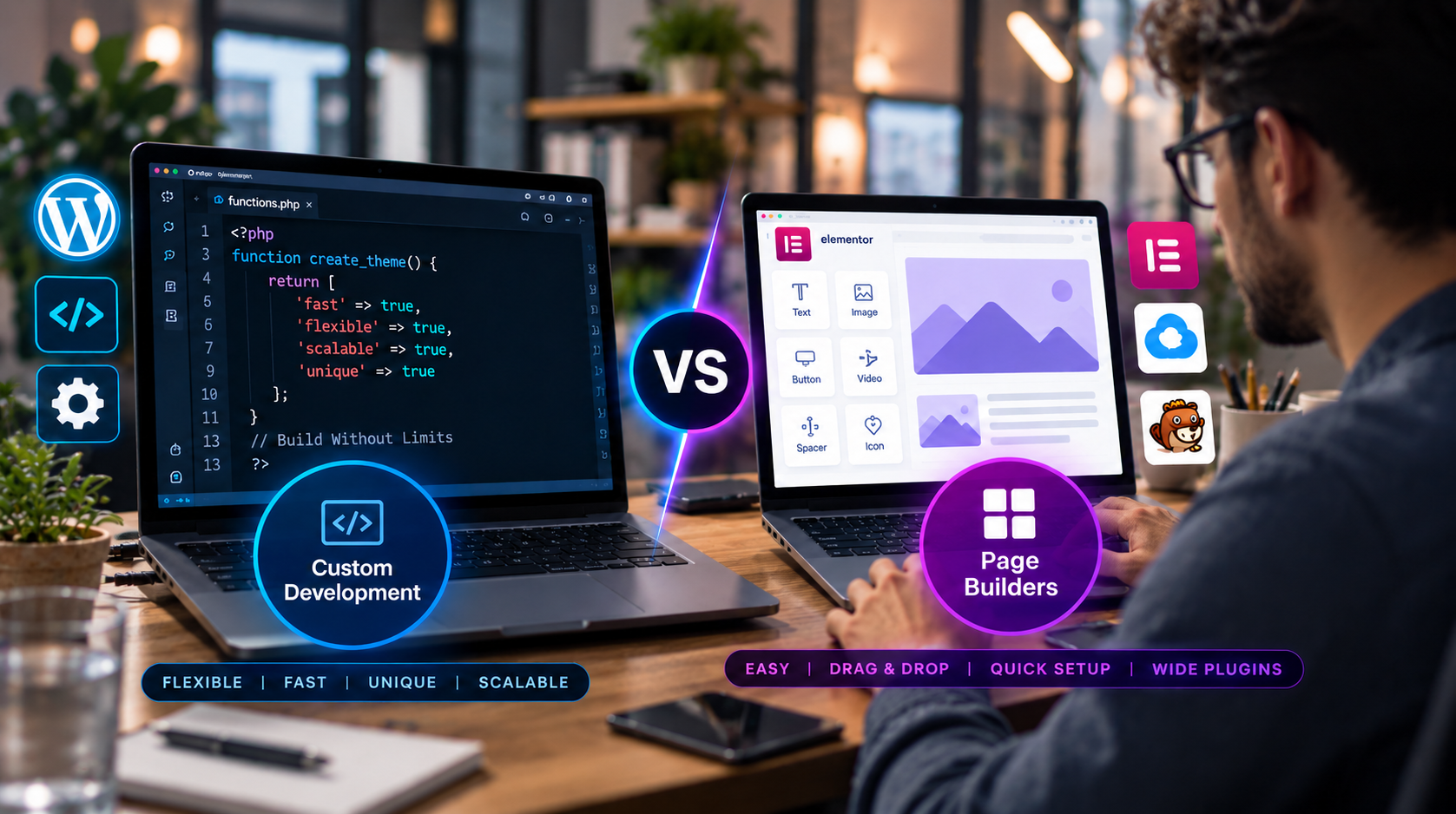
Compare WordPress page builders like Elementor, Divi, and Bricks with custom themes to understand flexibility, performance, scalability, and development needs.

Explore the pros, cons, and real-world limitations of AI website builders for established brands, including scalability, security, customization, and brand identity.

Discover why premium web design remains essential in 2026. Learn how custom branding, unique design, and professional UX help businesses stand out in the AI era.