


The Blueprint of Success: Web Design Project Phases & Process Explained

September 18, 2026

Building a website is very similar to constructing a modern skyscraper. You cannot simply start laying bricks without an architectural blueprint, a soil test, and a structural layout. In the digital space, a website built without a structured process results in missed deadlines, bloated budgets, and a frustrating user experience.

At Weeb Innovation, we do not just throw together templates. We follow a highly calculated, phase-by-phase web development framework that ensures every website we launch is visually stunning, highly secure, and optimized to convert traffic into revenue. Whether you are a business owner looking to build your first website or a marketing manager planning a redesign, understanding the standard web design lifecycle is crucial. Let’s break down the exact phases of a professional web design project in 2026.

Phase 1: Discovery, Research & Strategy (The Foundation)

Phase 1: Discovery, Research & Strategy (The Foundation)

Every successful project starts with deep diving into data. Before looking at color palettes or writing a single line of code, we must understand the "Why" behind the website.


  • Client Briefing & Goal Alignment: We identify the primary objective of the site. Is it to generate B2B leads, sell e-commerce products, or act as a digital portfolio?
  • Competitor Landscape Analysis: We study your top three competitors to analyze what they are doing right, where they are failing, and how your brand can outperform them.
  • Target Audience Persona Mapping: We map out who your actual users are. What are their pain points? How do they navigate online?


Phase 2: Information Architecture (IA) & Wireframing (The Skeleton)


Once we have the data, we create the structural blueprint of the website. This phase focuses entirely on usability and flow, completely stripping away visual distractions like images and colors.


  • Sitemap Creation: A sitemap is a visual directory showing how different pages connect to one another. A clean sitemap ensures that a user (and a Google crawler) can find any piece of information within three clicks.
  • Low-Fidelity Wireframes: These are black-and-white structural sketches of your webpages. Think of it as a blueprint showing exactly where the logo goes, where the main video sits, and where the Call-To-Action (CTA) buttons are placed.


Phase 3: UI/UX Conceptual Design (The Visual Identity)


This is where the magic happens. Our design team transforms the boring black-and-white wireframes into a stunning, high-fidelity visual experience.


  • Mood Boards & Branding: We align the website's visual style with your core brand identity. This includes selecting modern typography, high-converting color psychology, and professional imagery.
  • Interactive Prototypes: Using advanced design tools like Figma, we create clickable prototypes. This allows you to experience exactly how the website will look, feel, and flow on desktops and smartphones before a developer writes any code.


Phase 4: Full-Stack Frontend & Backend Development (The Core Engineering)


Once you approve the visual design, the project moves to our engineering floor. This is where static layouts are transformed into a living, breathing digital machine.


  • Frontend Engineering: Transforming the Figma designs into clean, responsive HTML, CSS, and JavaScript. We ensure every layout is fluid and pixel-perfect across iPhones, Androids, tablets, and 4K monitors.
  • Backend Integration & CMS Setup: Setting up a robust Content Management System (CMS) or building custom web logic. We ensure the backend admin dashboard is incredibly easy for your team to update images, add blogs, and track customer forms.


Phase 5: Rigorous Quality Assurance (QA) & Testing (The Audit)


No website leaves the Weeb Innovation workshop without going through a brutal testing phase. A single broken link or slow-loading page can ruin a brand's reputation.


  • Cross-Browser & Device Compatibility: We test the website across Google Chrome, Apple Safari, Microsoft Edge, and Mozilla Firefox.
  • Speed & Performance Optimization: We compress high-resolution images, minify code files, and leverage server caching to guarantee a loading time of under 2 seconds.
  • SEO Baseline Check: We verify that meta tags, alt text for images, and structural schemas are flawlessly implemented.


Phase 6: Deployment, Launch & Post-Launch Support (The Takeoff)


The big day! Launching a site involves carefully migrating files from our private staging server to your live production server without causing a single second of downtime.


  • The Final Switch: Transferring domains, setting up secure SSL certificates, and pointing DNS records.
  • Continuous Monitoring: For the first 30 days post-launch, our team closely monitors live traffic anomalies, form submissions, and server load spikes to guarantee a seamless user experience.


Summary Table of Project Timelines (Standard 8-Week Blueprint)

Phase Core Deliverables Estimated Time
1. Discovery & Strategy Competitor reports, User Personas, Project Timeline Week 1
2. Architecture Visual Sitemap, Low-Fidelity Wireframes Week 2
3. UI/UX Design Figma Prototypes, UI Component Libraries Weeks 3–4
4. Coding & Development Working Staging Site, CMS Setup, Custom Forms Weeks 5–6
5. QA & Testing Speed Optimization Reports, Bug Fix Logs Week 7
6. Launch & Handover Live Website, Admin Training Video Guide Week 8

Conclusion & Call to Action (CTA)


Building a premium website requires a precise mix of strategy, art, and deep engineering. Skipping even a single phase can result in a digital asset that looks great but fails to generate sales.


Are you looking for a development team that respects your timeline and treats your business like their own? At Weeb Innovation, our battle-tested project framework guarantees that your next web launch will be completely stress-free. Let’s sit down and plan your project blueprint today!

October 13, 2026
Both options offer valuable benefits. The right choice depends on the size of the business, customer expectations, and the types of inquiries received. How AI Chatbots Can Help Increase E-Commerce Sales Customer support is not just about solving problems. It can also influence purchasing decisions. When customers receive timely information, they may feel more confident about completing their orders. For example, imagine a shopper visiting an online clothing store who is unsure about product size, delivery charges, or return options. Instead of leaving the website to search for answers, the shopper can ask a chatbot and receive immediate assistance. An effectively configured chatbot can help businesses: Reduce customer waiting time. Assist shoppers during product selection. Answer common checkout questions. Provide product recommendations. Improve the overall shopping journey. Reduce avoidable cart abandonment. However, results depend on chatbot accuracy, website integration, and the quality of the customer experience. The Smartest Approach: Combining AI Chatbots with Human Support For many online businesses, choosing only one customer service method may not be the most effective strategy. A hybrid customer support model combines the speed of AI chatbots with the personal attention of human agents. Here's how it works: Step 1: AI Handles Basic Questions A chatbot responds to routine questions about products, shipping, payment methods, store policies, and order tracking. Step 2: Complex Issues Are Identified When a customer needs additional assistance or the chatbot cannot confidently resolve an issue, the conversation is transferred to a human representative. Step 3: Human Agents Provide Personalised Solutions Support employees handle complicated complaints, unusual requests, and sensitive customer concerns. Step 4: Businesses Improve Support Quality Customer feedback and conversation trends help businesses identify common problems and improve their support processes. This approach can improve efficiency without sacrificing the human connection customers value. How to Choose the Right Customer Support Solution Before investing in customer support technology, online store owners should consider several factors. Business Size: Small online stores may begin with basic automated chat support, while larger businesses may require advanced AI tools and dedicated support teams. Customer Requirements: Businesses receiving mostly repetitive questions can benefit from automation. Stores dealing with highly customised products or complicated services may need more human involvement. Budget: Compare chatbot subscription fees, setup costs, maintenance expenses, and human staffing requirements. Integration: Choose tools that work with your e-commerce website, CRM, order management system, and existing communication channels. Data Security: Make sure your customer support solution protects customer information and follows applicable privacy requirements. The Future of Customer Support in E-Commerce Customer service technology continues to evolve as AI becomes more capable. In 2026, online businesses can explore AI-powered tools that support multilingual conversations, personalised product discovery, automated ticket classification, and smoother transfers between chatbots and human agents. However, automation should not come at the expense of customer satisfaction. Businesses that focus on accurate information, transparent communication, privacy, and easy access to human assistance will be better positioned to build lasting customer relationships. How Weeb Innovation Can Help Your Online Business Grow At Weeb Innovation , we believe successful e-commerce businesses need more than an attractive website. They need a digital experience that makes shopping simple, convenient, and trustworthy. A well-designed online store, supported by smart technology and effective customer communication, can help businesses improve customer engagement and create more opportunities for growth. Whether you're launching a new e-commerce website or improving an existing online store, choosing the right digital solutions is an important part of building a successful online presence. Final Thoughts AI chatbots and human customer service both play important roles in modern e-commerce. Chatbots provide speed, availability, and automation, while human representatives offer empathy, flexibility, and personalised problem-solving. For most growing online stores, combining AI automation with reliable human assistance offers a practical balance between efficiency and customer satisfaction. The future of e-commerce customer support is not simply about replacing people with technology. It's about using technology to help businesses serve their customers better. Want to create a smarter, more customer-friendly online store? Connect with Weeb Innovation and explore digital solutions designed to support your business growth.

October 8, 2026
Compare Duda Website Builder and custom development for agencies and mid-sized brands, covering performance, scalability, costs, flexibility, and long-term growth.
Two laptop screens comparing WordPress code and a visual website builder in a modern office
October 6, 2026
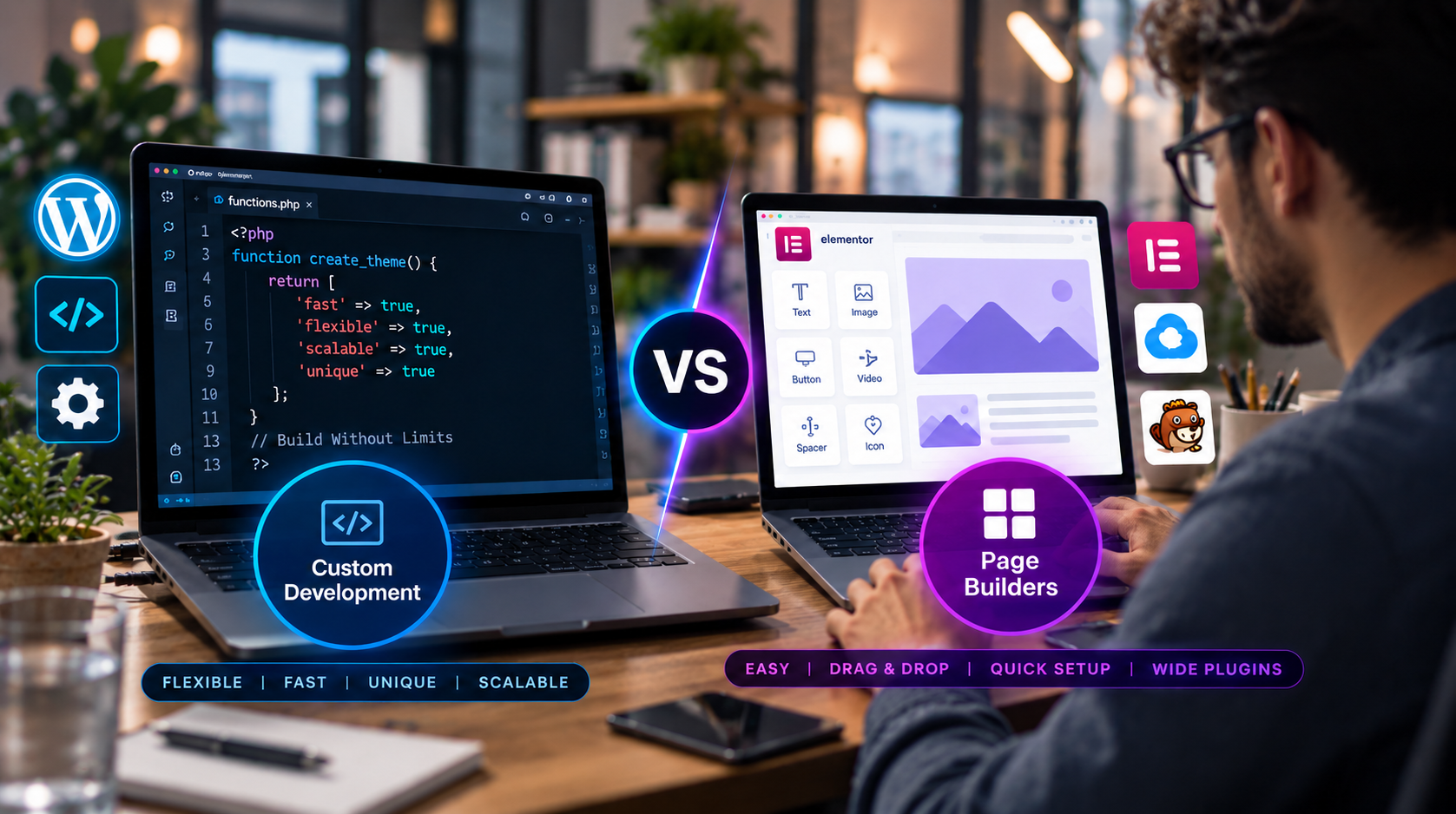
Compare WordPress page builders like Elementor, Divi, and Bricks with custom themes to understand flexibility, performance, scalability, and development needs.

Person wearing a headset works at a desk with multiple monitors displaying code and a laptop.
October 1, 2026
Explore the pros, cons, and real-world limitations of AI website builders for established brands, including scalability, security, customization, and brand identity.

Person checking a digital checklist on a laptop with a stylus at a desk
September 29, 2026
Use this complete 2026 website launch checklist to review SEO, forms, security, performance, mobile responsiveness, and other essential pre- and post-launch tasks.

Share